

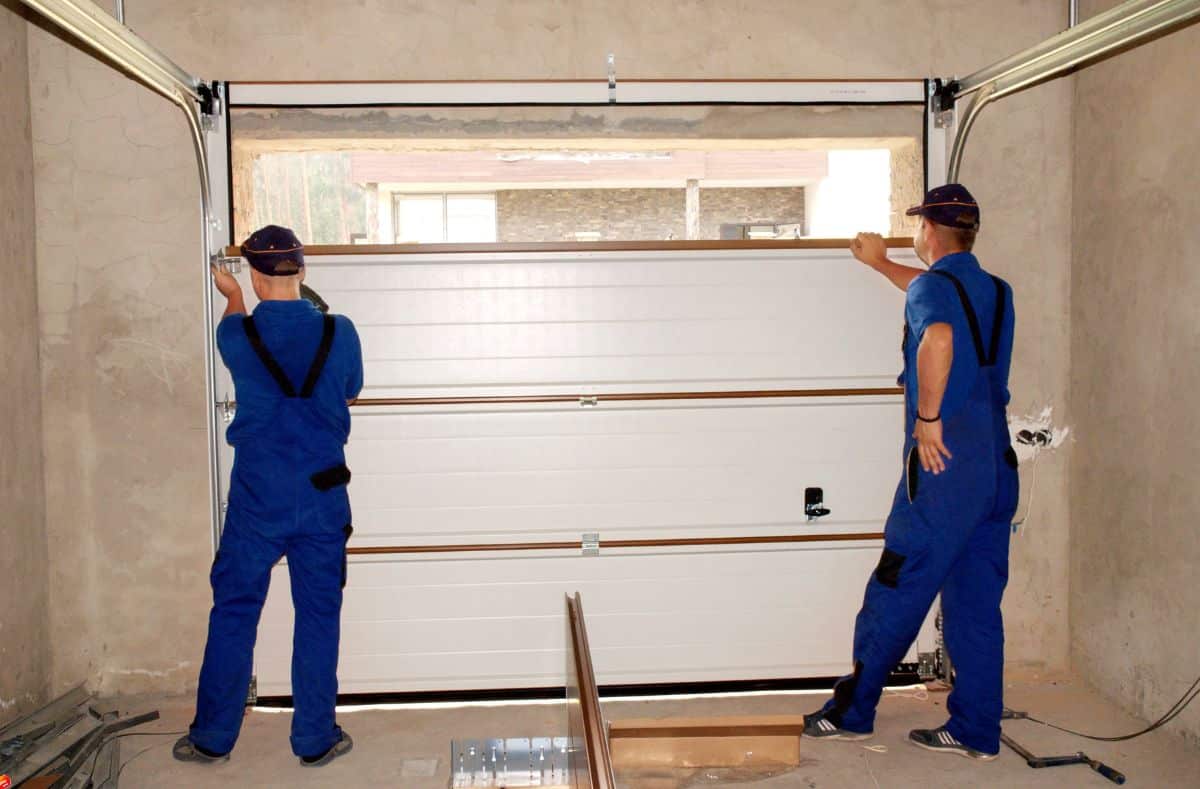
It may look harmless, but garage door installation errors can have serious consequences for your home if not performed by a professional. The true cost appears later, when repeated cycles magnify friction, loosen hardware, and amplify imbalance into visible problems. Many homeowners discover that “it works” is not the same as “it will keep working reliably,” especially when early errors shape wear patterns that are expensive to reverse.
Costly garage door repair often becomes necessary when installation mistakes create recurring misalignment, premature spring wear, opener strain, or track deformation. Those outcomes often push routine garage door maintenance into a reactive cycle, where minor issues are repeatedly patched until an emergency garage door service call becomes unavoidable. Understanding which errors most often lead to costly repairs helps explain why precision matters during installation.
Alignment Errors That Create Compounding Wear
Alignment errors generate friction, and friction accelerates wear over time. Tracks, rollers, and hinges are designed to share forces evenly, but misalignment concentrates stress in one area.
That concentrated stress leads to repeated failures, increasing repair costs.
Find out which important details homeowners often miss during garage door installation and how those oversights affect long-term results by reading: What Homeowners Often Miss During Garage Door Installation.
Track misalignment that chews through rollers and hardware
Tracks guide the door’s path, and even small spacing errors can force rollers to grind against the track edge. Over time, roller bearings fail, stems bend, and track surfaces deform.
Common misalignment outcomes include:
- Rollers are wearing unevenly and wobbling under load
- Track edges are developing burrs that increase friction further
- Hinges twisting as the door fights the track path
- Panels flexing as alignment forces the door sideways
These problems rarely resolve without correcting the original alignment error. Without correction, each replacement part wears quickly, increasing the total repair cost. A single alignment error can trigger a chain of garage door repair calls that appear unrelated until the full geometry is evaluated.
Explore how garage door installation choices influence performance, durability, and reliability over time by reading: How Garage Door Installation Choices Affect Long-Term Performance.
Door binding that forces the opener to become the workhorse
When the door binds, the opener must apply extra force to move it. That compensation increases wear on gears, motor components, and mounting points.
Binding typically causes:
- Higher force settings that reduce safety margins
- Increased vibration that loosens hardware and shifts tracks
- Premature opener failure that requires replacement instead of repair
- Unpredictable movement that increases the risk of sudden component failure
This pattern often leads to emergency garage door service because the opener can fail suddenly due to overheating or worn internal components. Correcting binding early is far less expensive than replacing multiple strained components later. The cost is rarely the binding itself; it is the cascade that follows.
Learn why garage door size and weight play a critical role in safe operation and proper balance during installation by reading: Why Garage Door Size and Weight Matter During Installation.
Balance Errors That Accelerate Spring and Cable Failures
A residential garage door should be balanced so the springs carry most of the weight. When the balance is wrong, the door stresses springs, cables, rollers, and opener components simultaneously.
Balance errors frequently occur after installation when tensioning is rushed or spring selection is based on assumptions. The lack of professional installation exposes homeowners to emergency room visits, estimated at 20,000 annually.
Incorrect spring selection that shortens the system’s lifespan
Springs must match the door’s weight and configuration; incorrect sizing affects the door’s travel. A door can still move with faulty springs, but it will do so while damaging parts.
Common results of incorrect spring selection include:
- The door drifted downward during manual tests
- Uneven lift that pulls one side ahead of the other
- Increased cable stress that frays strands prematurely
- Excess opener strain that shortens motor life
These failures can become costly because spring problems often damage other components before the root cause is addressed. Routine garage door maintenance becomes ineffective when spring sizing is incorrect, as adjustments cannot achieve true balance. Correct spring sizing prevents many downstream garage door repair costs.
Uneven tension that encourages crooked travel and track damage
Even properly sized springs can cause problems if tension is uneven, as one side lifts faster and the door twists during operation. Twisting increases track friction and pulls rollers toward the edge.
Uneven tension often produces:
- Tilted door movement that increases side loading
- Repeated need for track adjustments that never hold
- Accelerated roller wear on one side
- Higher risk of sudden failures that require emergency garage door service
The cost becomes significant when track deformation occurs, because replacing track sections and damaged rollers is more expensive than correcting tension early. A balanced system protects components from uneven forces. Tension accuracy is a cost-control decision as much as a performance decision.

Weak Mounting That Turns Vibration Into Failure
Mounting decisions determine whether the track system stays rigid or slowly shifts under vibration. A shifting track causes alignment drift, which increases wear, noise, and the risk of failure.
Weak mounting often becomes a hidden driver of repeated garage door repair visits.
Fasteners and brackets that cannot hold under load
Tracks and springs pull against mounting points with repeated force. If brackets flex or fasteners loosen, the system geometry changes gradually.
Mounting failures often include:
- Brackets are pulling away from the framing over time
- Fasteners stripping or losing clamping force
- Track joints shifting and creating hard “bumps” during travel
- Hanger sag that changes the horizontal track pitch
These issues are costly because they often require rework, including patching the structure, replacing hardware, and realigning tracks. When the system shifts enough, the rollers can derail, often triggering an emergency garage door service call. Good mounting prevents slow geometry collapse.
Overlooking reinforcement on heavy or wide doors
Heavier doors require stronger reinforcement at key stress points. Without reinforcement, track hangers flex and panels move unpredictably.
Reinforcement should address:
- Wider doors that create greater torsional force during travel
- Heavier doors that require a stronger track gauge and hangers
- High-cycle households where vibration is constant
- Garages with framing that needs added support for load distribution
When reinforcement is missing, costs rise because failure involves multiple components rather than a single part. A door that begins as “a little noisy” can end as a full track rework. Reinforcement decisions often determine whether garage door maintenance remains routine or becomes recurring repair.
Safety Setup Errors That Create Risk and Liability
Safety systems are designed to prevent injury and property damage, and errors in these systems can lead to high-consequence outcomes. Openers, sensors, and force settings must be calibrated correctly.
When safety is misconfigured, repairs are not merely costly, since they can be urgent.
Sensor misalignment that leads to unreliable stops
Sensors must remain aligned and stable, and poor mounting can cause frequent drift. Unreliable sensors create unpredictable door behavior.
Common causes include:
- Loose brackets that shift with vibration
- Improper placement that increases sunlight interference
- Wiring strain that pulls sensors out of alignment
Unreliable safety behavior increases emergency garage door service calls as owners lose trust in the system’s safety response. Correct sensor placement and stable mounting reduce risk and prevent repeated service visits.
Force settings that compensate for mechanical problems
Force settings should remain moderate, since high force can defeat the safety response. When settings rise to overcome binding, the risk of injury and damage increases.
High-force outcomes often include:
- The door is failing to reverse quickly under an obstruction
- Increased strain on opener components
- Greater stress on rails and mounting points
- Unpredictable behavior during closing cycles
Correct mechanical alignment should come first, and force should confirm smooth movement rather than mask resistance. Safety errors can become costly due to damage and the need for urgent corrective actions. A safe setup is part of durable performance.
Trusted Garage Door Installation
Costly repairs often begin with installation errors that seemed small during initial operation, yet those errors shape friction, balance, and vibration patterns that compound over time. Misalignment accelerates wear, balance issues strain springs and openers, weak mounting allows geometry drift, and safety misconfiguration increases both risk and urgency. Many garage door repair expenses are not random; they follow predictable patterns driven by early installation decisions.
A residential garage door performs best when installation prevents stress from concentrating in any one area. When errors remain uncorrected, routine garage door maintenance becomes less effective and more frequent, eventually shifting problems into the territory of emergency garage door service. Installation accuracy reduces long-term disruption and prevents layered damage that makes repairs expensive and recurring.
Elite Overhead Garage Doors specializes in complete garage door solutions that support security and everyday performance. Serving Greenville homes and businesses, services include expert installation, responsive repairs, and routine maintenance. Licensed and insured technicians ensure each project is completed correctly and efficiently. Proven brands are known for maintaining high standards of quality and durability.
Contact us today or give us a call for trusted garage door services in Greenville.